

Winter Solstice | Rest and Roots
On entering the season of stillness and underground life.

’Tis the season for turning inward: light thinning, breath softening, roots resting deep. What if honoring the season meant choosing its rhythm over the world’s?
Part of the Fallow + Reunion series: Winter Solstice
A quiet exploration of how we rest, remember, and find our way back into rhythm with life.
1. On rest and roots.
On this solstice day, the northern hemisphere folds itself into its darkest moment—a hinge of stillness before the slow return of light begins.
As winter arrives, we enter a time that invites us to slow our pace and listen for quieter rhythms. The light thins, the air sharpens, and the world seems to exhale.
It’s easy to mistake this stillness for absence—
but beneath the surface, life continues its steady, unseen work.
Coming into winter already in depletion, I’m beginning to see winter not as an end, but as a threshold—a quiet turning where soil and life can settle, soften, and make space for whatever slow renewal might someday take root.
After years of prioritizing physical rest yet rarely feeling restored, I’ve begun exploring the other types of rest and renewal. And with that, I’m wondering what more this season might teach me.
Winter asks less of us on the surface, yet its deepest work depends on our willingness to slow down—to honor the rhythms that sustain all life, seen and unseen.
This season, I’ll be leaning into winter’s example: expanding what it means to rest, to root, and to trust the quiet work that tends life. Perhaps you feel that same pull—to move at the rhythm of the Earth, to let stillness do its work.
2. A pause full of purpose.
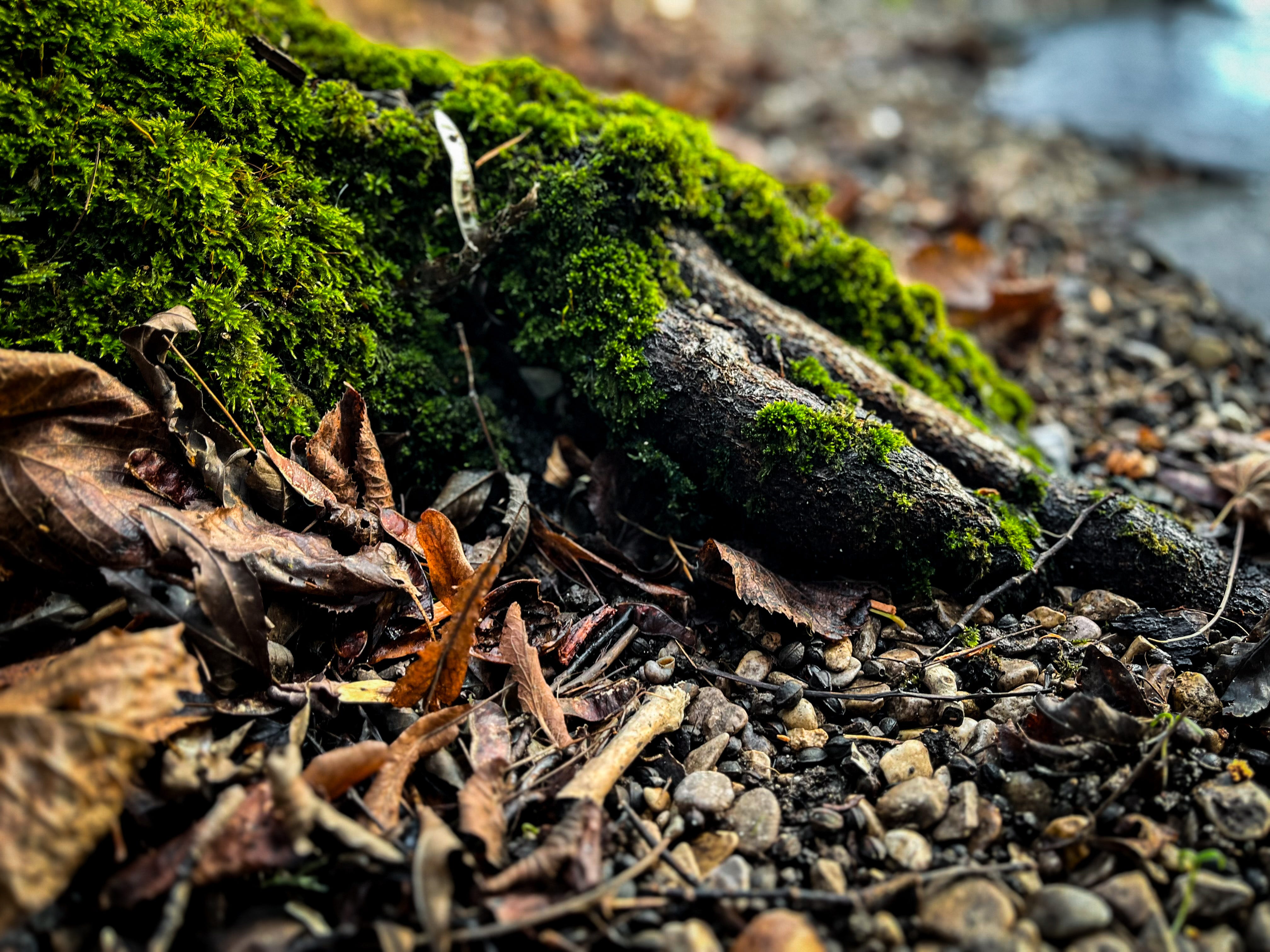
Even in cold and quiet months, the Earth is far from asleep.
Roots reach deeper, searching for water and minerals.
Beneath the soil, fungi continue their patient exchange—linking trees, passing sugars, signals, and care.
Animals slow their pace or shift their habits to match the dimming light.
Decomposition softens into renewal, turning fallen leaves into humus—
and the slow cycle of replenishment begins again.
Winter may look like pause, but it is a pause full of purpose:
a kind of deliberate quiet that protects what will matter later.
3. An act of resistance.
And yet—winter arrives in a culture that resists slowing down.
Even as the natural world contracts into stillness, the human world accelerates:
closing out the year, finishing projects, gathering, preparing, performing.
Where the Earth shelters its energy, we are encouraged to spend ours.
Where winter asks us to root down, culture urges us to bear fruit.
And thus, following winter’s rhythm becomes its own act of resistance—
a choice to honor limits in a world that keeps pressing for more.
4. Rest as remembering.
What if winter is not a pause to endure, but a teacher—
one that shows us how to let go of the unnecessary,
so that what matters can come back into view?
What if rest is less about stopping, and more about remembering what we’re made for—
rhythms that protect us,
boundaries that nourish us,
ways of being that don’t require constant output?
This is the hinge I want to carry into the season:
Winter invites a different kind of remembering—
not of what we produce, but of what lets us feel alive.
And in that remembering, we begin to find our way back
to a rhythm that can hold us.
5. Seasonal ritual and practice.
A ritual for entering winter.
The Ecology of Breath
Each morning or evening, pause for a single, unhurried breath.
Inhale what the trees release; exhale what they need.
Let this become a tiny act of reciprocity—
a reminder that even in stillness, you remain part of a living exchange.
Return to it whenever you feel the season’s weight or its invitation to slow down.
…
A practice for the season.
Let It Winter — a season-long tending practice.
In one short week, the world will turn toward resolutions and ambitious lists of goals, as if January 1 were a magical reset.
But winter is not the season of new growth—that belongs to spring.
This winter, try something gentler:
When an idea, desire, or impulse arises,
don’t act on it. Just write it down.
Place it somewhere safe—a jar, a box, a corner of your notebook—
and let it winter.

You’re not abandoning your intentions.
You’re letting them root, the way seeds do in cold soil.
Winter is not the season for launching, striving, or reinventing.
It’s the season for storing energy, holding vision quietly, and letting ideas gather depth in the dark.
So your practice is simple:
when a new goal or impulse appears, write it down, set it aside, and let it winter.
Come spring, you can return to these notes and see which ones have life in them—and which ones needed the dark and the pause to soften, reshape, or release.
6. A solstice blessing.
May your body remember how to rest.
May your roots settle deep in quiet soil.
Even wintering is its own kind of care—
a slowing that sustains life’s rhythm.
In Tending,
Melissa

A living glossary.
A glossary of seasonal and ecological terms is growing here, added to as the seasons turn.
A behind-the-scenes note.
This piece grew from years spent in deep depletion—when even rest felt insufficient, and I began wondering what it might mean to let the natural world teach me. It came from listening more carefully to the underground work of roots, fungi, and stillness, and recognizing echoes of that work in my own life.
Ecological notes.
Roots continue to grow in winter, reaching deeper in search of water and minerals even as the surface world stills.
Mycorrhizal fungi maintain year-round exchanges—moving sugars, nutrients, and chemical signals between trees.
Snow and soil act as natural insulation, creating the warmer “subnivean zone” where small mammals stay active.
Decomposition slows but does not stop; fallen leaves break down into humus that nourishes spring growth.
Animals conserve energy through slowed movement, torpor, altered foraging, and light-responsive behavioral shifts.
Companion reading.
If this season invites you to learn more, you may want to seek these companions that shaped how I’ve come to think about winter. I’ve also included a few that I read with my daughter during this season.
For adults:
Wintering — Katherine May
A tender invitation into rest, resilience, and the seasons of the soul.Braiding Sweetgrass — Robin Wall Kimmerer
A weaving of wonder, reciprocity, and the quiet teachings of the living world.Amphibious Soul — Craig Foster
A meditation on belonging, wildness, and remembering our place in the more-than-human world.
For children:
The Shortest Day — Susan Cooper & Carson Ellis
A lyrical celebration of winter’s turning, light returning, and the old rhythms that carry us.Winter Is Coming — Tony Johnston & Jim LaMarche
A gentle glimpse into the hidden winter world and the patient work of animals preparing for cold.The Snowy Day — Ezra Jack Keats
A simple, wonder-filled story of a child discovering the quiet magic of fresh snow.
Look for them in your local library, independent bookstore, or secondhand shop, and help nourish the roots of your community as you do.
Oh so lovely. Thank you for this cozy gift, that builds the anticipation of the season to come. I especially loved the thought offering of: "shows us how to let go of the unnecessary". I will meditate on this.
It makes me think of a line that has been in my head: A season of death to allow for life. I don't mean this in a pejorative way, especially as it still has much life that runs deep beneath the surface versus horizontal/overt. Still, it feels like a season of death. And maybe that is an uncomfortable sentiment to get accustomed to.